Early Heritage and Government Vision
Regional viticulture began in 1873 when David Herd planted 0.4 hectares of Brown Muscat grapes at Auntsfield. He crafted red port-style wines on the property until his death in 1905. Craftsmen restored his original cellar during the 2010s. A bronze statue honouring Herd now stands at Blenheim Airport.
Official interest grew in January 1897 when the Department of Agriculture published a dedicated viticultural report. By 1904, the Government Viticulturist reported that Marlborough wines compared favourably with imported European vintages. He called for statutory regulations against adulterated wine, establishing a regional quality benchmark that took seven decades to realise.
First Vines Planted1873
Commercial Revival1973
Key ValleysWairau & Awatere
Permanent GalleryBrayshaw Park
Gallery Collections and Exhibition Credits
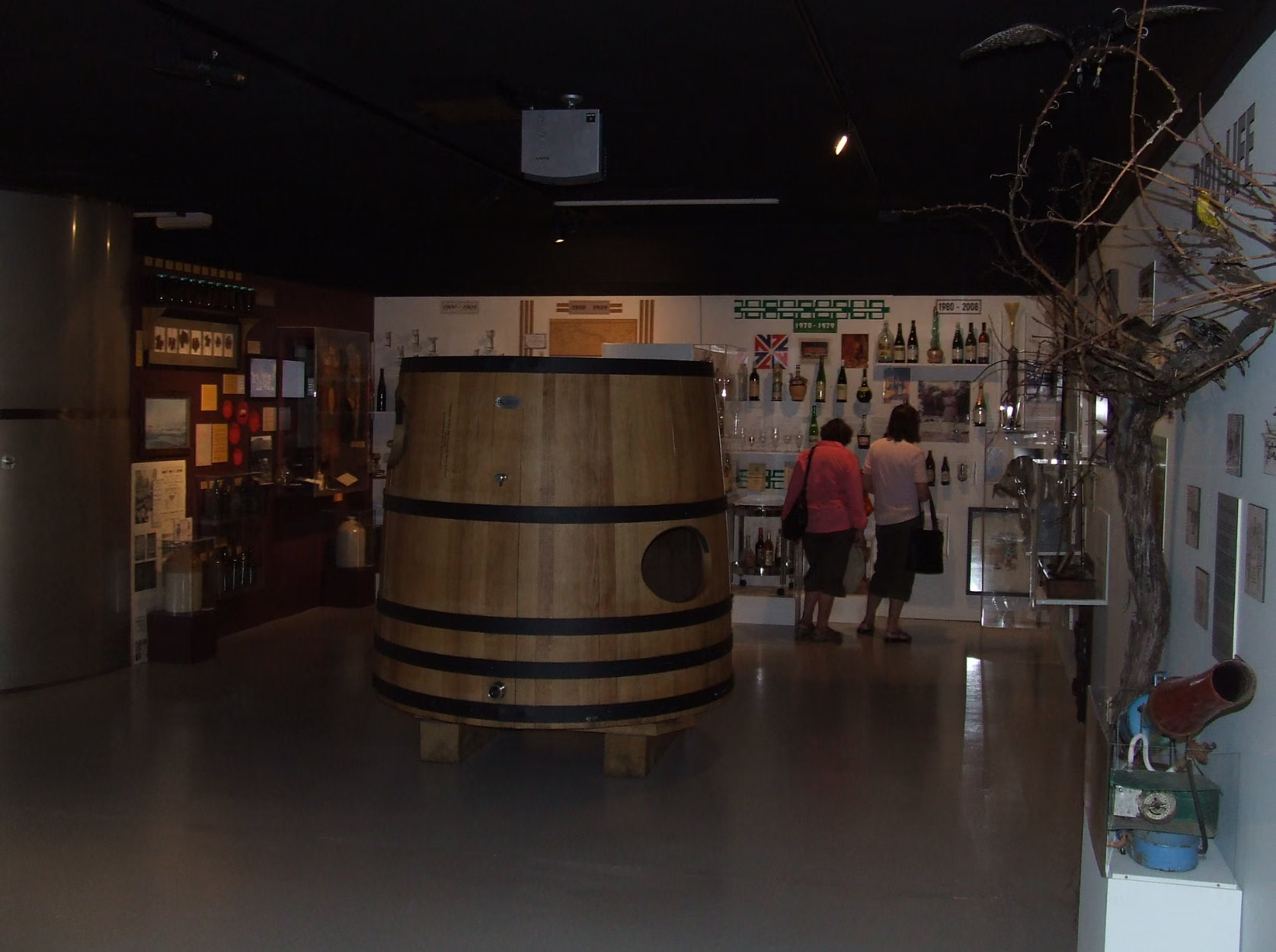
The exhibition documents this working heritage through vintage cellar machinery, barrel cooperage, laboratory glassware, and hand-operated basket presses. Visitors can inspect rare historic bottles alongside archival photography, interactive displays, and recorded oral histories. These resources follow the winemakers, cellar hands, and pioneering families who shaped the modern industry.
Viticulture scientist Dr Adam Friend curated the gallery with designer Sally Papps and project manager Virginia Watson. Funding support was provided by Marlborough District Council, Marlborough Lines, and the Lottery Grants Board. Commercial sponsors include Hunter's Wines, Auntsfield, Yealands, Jackson Estate, Nautilus, Wither Hills, Forrest, Lawson's Dry Hills, Fromm, and Villa Maria. The museum also thanks John Rainey, Belinda Vavasour, Jenny Pierson, Pam and Tom Woodward, and the Marlborough Historical Society.
Plan Your Visit to the Wine Exhibition
The exhibition welcomes visitors during regular museum hours on Sunday, Tuesday, and Thursday from 11:00 AM to 3:00 PM. It serves as an informative first stop before touring the surrounding cellar doors.