Pastoral Origins on the Redwood Run
Charles Redwood established the Riverlands run south of Blenheim, requiring accommodation for station hands and shearing gangs. The Wairau Plain offered little timber, so builders turned to the subsoil. They dug clay from the riverbank, cut tussock grass from the paddocks, and mixed these with water and stable manure to form a workable cob mixture.
Construction took place between 1854 and 1868. Workers laid the puddled earth in courses, each layer left to cure before the next was added. The resulting walls, up to 40 centimetres thick, supported a roof and withstood the climate - a practical solution when imported timber was scarce and costly.
Construction Period1854 - 1868
Primary MaterialCob (clay, tussock, chaff)
Heritage StatusCategory 2 (No. 1471)
LocationSH1, Riverlands
Earth Architecture and Wall Composition
The exterior walls measure approximately 40 centimetres in thickness. Each layer of clay-tussock mixture was applied by hand and allowed to harden in the sun before the next course followed. This gradual process required careful timing and attention to the weather.
Structural investigations in the 1960s identified an unusual ingredient within the puddled clay: horse manure containing undigested chaff. The chaff fibres acted as a natural binder, preventing shrinkage cracks as the walls dried. The same method appears in the cob cottage at Molesworth Station. Together, these two buildings represent notable surviving examples of earth construction from that era in Marlborough.
Because timber was not readily available on the plains, cob offered a faster and cheaper alternative than carting milled logs from distant forests.
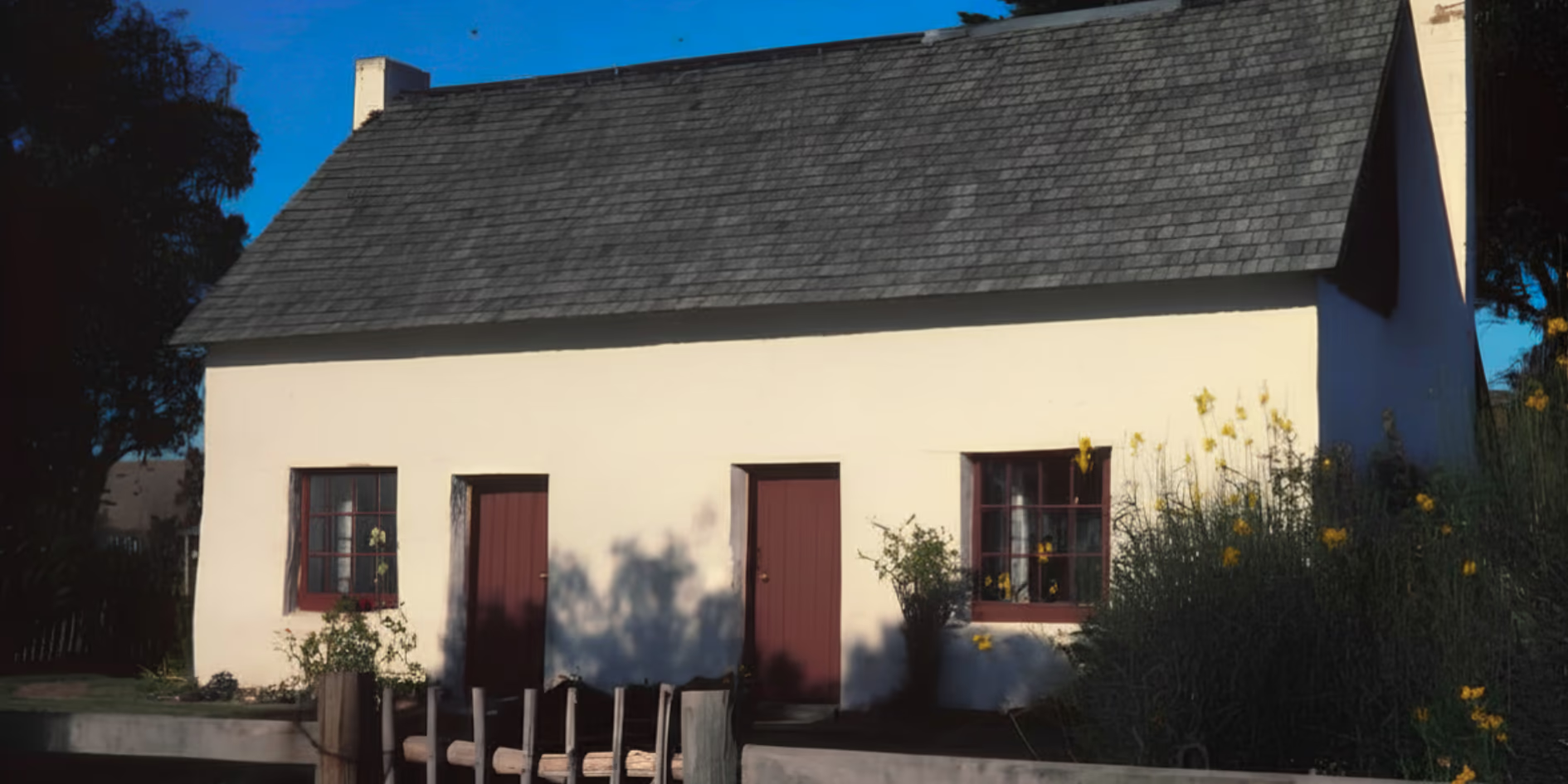
Architectural Note: Each damp layer had to cure in the open air before the next course could be added. Rain would stop work until conditions improved.
Adaptation: School, Wartime Store, and Race-Day Use
The building first served as quarters for station hands and shearers. From 1906 to 1909, it housed the Riverlands School, providing primary education for local children.
During the Second World War, the Home Guard used the cottage as a quartermaster store and a local command post. In later years, farmers repurposed it as a hay shed, general store, and sheltered pen for stud sheep. The building also served as an informal meeting place for bookmakers at the nearby racecourse - a lesser-known but documented chapter in its history.
Restoration and Heritage Listing
By the late 1950s, the cottage had deteriorated badly: the roof leaked, vegetation overran the walls, and sections of cob had slumped. In 1960, the Marlborough Historical Society and the National Historic Places Trust began a major conservation project. They cleared the site, repaired damaged earth walls, and re-shingled the roof.
The cottage opened to the public as a heritage display in 1965. Heritage New Zealand Pouhere Taonga listed it as a Category 2 Historic Place on 25 November 1982 (List No. 1471).
Ongoing work focuses on foundation repairs and moisture control - rising groundwater remains a constant threat to earthen walls. These efforts ensure the building remains intact for public education and research.
Plan Your Visit
Riverlands Cob Cottage is maintained by the Marlborough Historical Society. Heritage New Zealand List No. 1471 categorises the property on private land; exterior viewings and site visits require prior arrangement. For visiting enquiries or research access, contact the society through the museum.