Our migration stories show that we're all migrants, or the children of migrants, here in Marlborough. From the first voyagers landing at Te Pokohiwi o Kupe to the RSE workers who tend our vineyards, our region was built by those who came from afar.
Earliest Arrivals & Māori Settlement
The Marlborough story begins over seven centuries ago. East Polynesian voyagers crossed the Pacific and established a settlement at Te Pokohiwi o Kupe, the Wairau Bar, between 1280 and 1300 AD. This is one of the earliest known human settlements in New Zealand, and it remains the deepest layer of the region's migrant history.
Over subsequent centuries, further iwi established settlements across Te Tau Ihu. Rangitāne arrived from the North Island, constructing an extensive canal and lagoon network on the Wairau to harvest waterfowl and freshwater fisheries. In 1770, English explorer James Cook anchored in the Sounds, marking the beginning of recorded European contact. Decades later, during the 1820s and 1830s, northern migrations brought Ngāti Toa, Ngāti Koata, and Ngāti Rārua into Te Tau Ihu, establishing their presence across the Sounds and plains prior to widespread European settlement.
One of the earliest European settlers was a woman. Betty Guard arrived at the Te Awaiti shore whaling station in Tory Channel as a teenager with her husband, Jacky Guard. She gave birth to the first European child born in the South Island, tended by Māori midwives. In 1834, the barque Harriet was wrecked on the Taranaki coast, and Betty was taken captive with her two children. The military expedition that followed involved HMS Alligator and the colonial schooner Isabella, resulting in armed clashes at Waimate Pā. The Guard family subsequently established a home at Kākāpō Bay in Port Underwood in 1836, where Betty lived for the remainder of her life.
By 1848, pastoral farmers from Nelson were establishing wool-producing stations on the Wairau and Awatere plains. A small settlement grew on the Boulder Bank at the river mouth, with hotels, wool stores, and wharves serving bullock drivers, seamen, and traders.
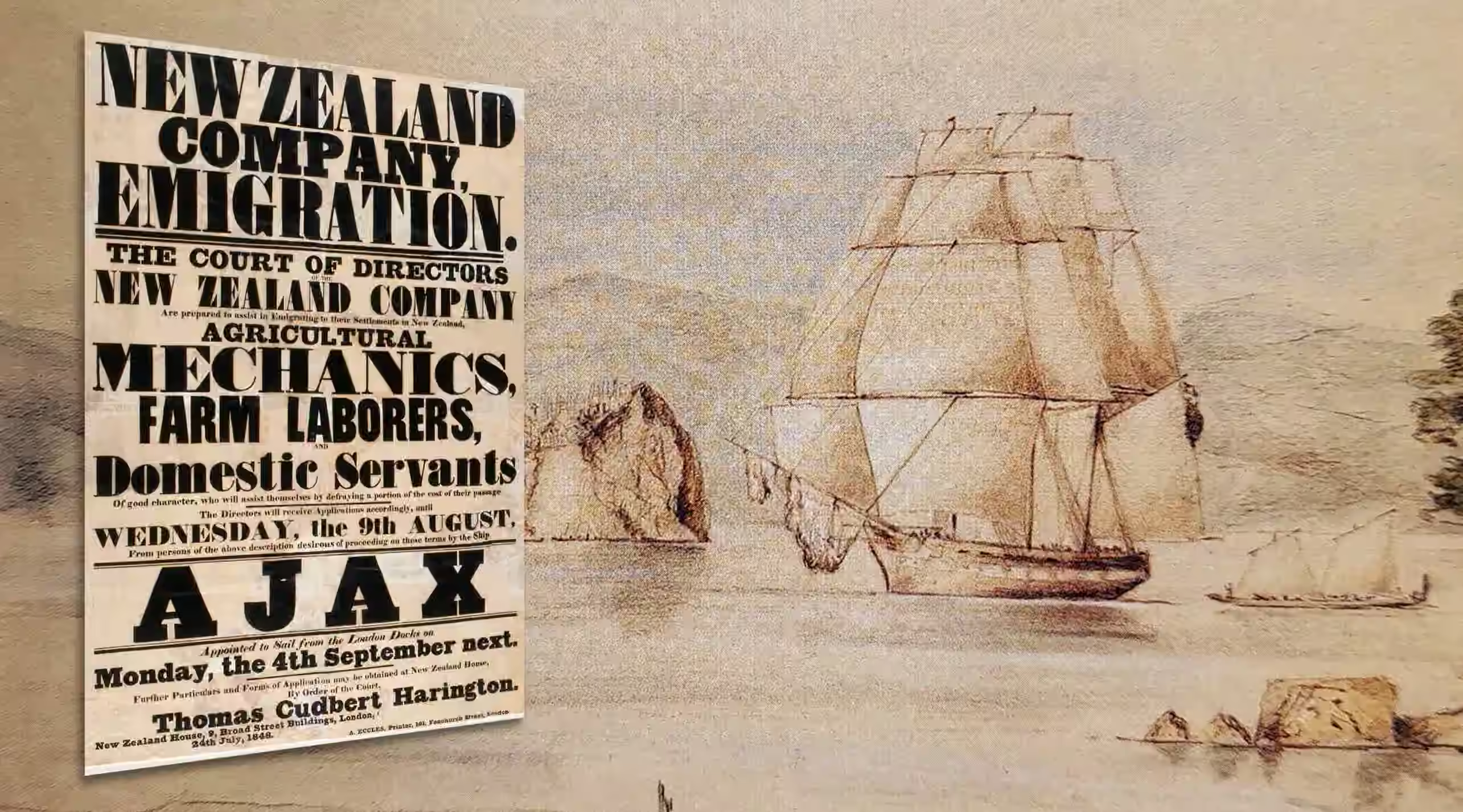
Source: Making Marlborough: The Migration Stories, Marlborough Video Vault (YouTube)
It functioned as the commercial centre of the Wairau until a massive earthquake in the 1850s shifted the river course, allowing shipping to reach further inland. The Boulder Bank settlement was abandoned, leaving only mounds where its buildings once stood.
Of the many immigrant ships associated with Marlborough, only one ever brought migrants direct to Picton. The Carnatic left London in September 1874 with almost 200 passengers bound for Marlborough and another 100 for Wellington. Fifteen-year-old Levinia Brist kept a diary of the 103-day voyage, recording seasickness, a moonlit dance on deck, and her disappointment at the sight of Picton. Most of the Carnatic passengers stayed in Marlborough, and many of their descendants remain in the region today.
Chinese Community & Early Diversity
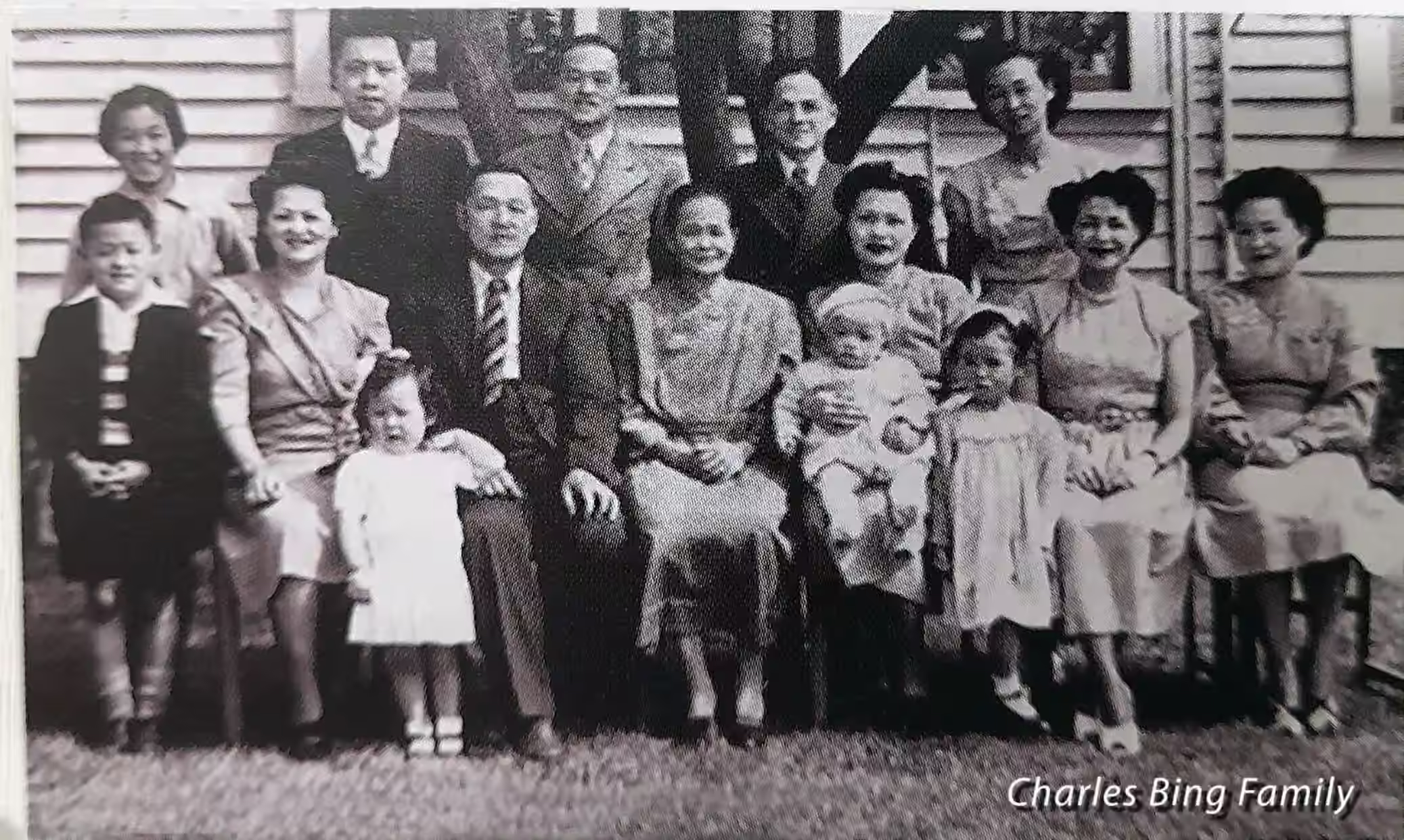
Image: Bing family of Blenheim. Source: Making Marlborough: The Migration Stories, Marlborough Video Vault (YouTube)
Chinese migrants came to Marlborough from the 1860s onwards, bringing horticultural skills and a formidable work ethic. In 1900, Pin Y and family established the Chong Le fruit shop on Market Street, advertising as the cheapest shop in town. Chan Bing Thai, known as Charles Bing, set up his own Market Street fruit shop in 1938. He and his wife Ping raised seven children who all worked in the business.
The Bing family's story continued into later generations. Eldest son Ian became New Zealand's only Chinese publican when he took over the old Clarendon Hotel in Picton. Another son, Graham, sold the fruit shop and established Bings Motel, one of Blenheim's earliest motels. Other Chinese families followed similar paths. Leonard Wong and Ining Fong ran a Market Street fruit shop, supervised workers at the Rapaura apple orchard, and eventually bought a farm near Renwick.
Not all early Chinese settlers were shopkeepers. William Ah Gee, born Jung da Yi in Canton Province, was a celebrated carver and furniture maker. He arrived in New Zealand in the 1860s and his work endures in carvings, tombstones, and museum collections around the country. At St Luke's Church in Spring Creek, the eagle lectern he carved in 1890 remains in use today.
Pioneering Women & Social Change
The immigrants brought many new ideas, and women were often at the forefront of the push for social change. Mary Müller, who lived in Blenheim, wrote extensively on women's rights under the pseudonym Femina. Her writing influenced public opinion at a time when women had no political voice. In 1898, Kate Sheppard published a tribute in The White Ribbon recognising Mary Müller as a pioneer suffragist whose earlier campaigning helped lead to women winning the vote in 1893.
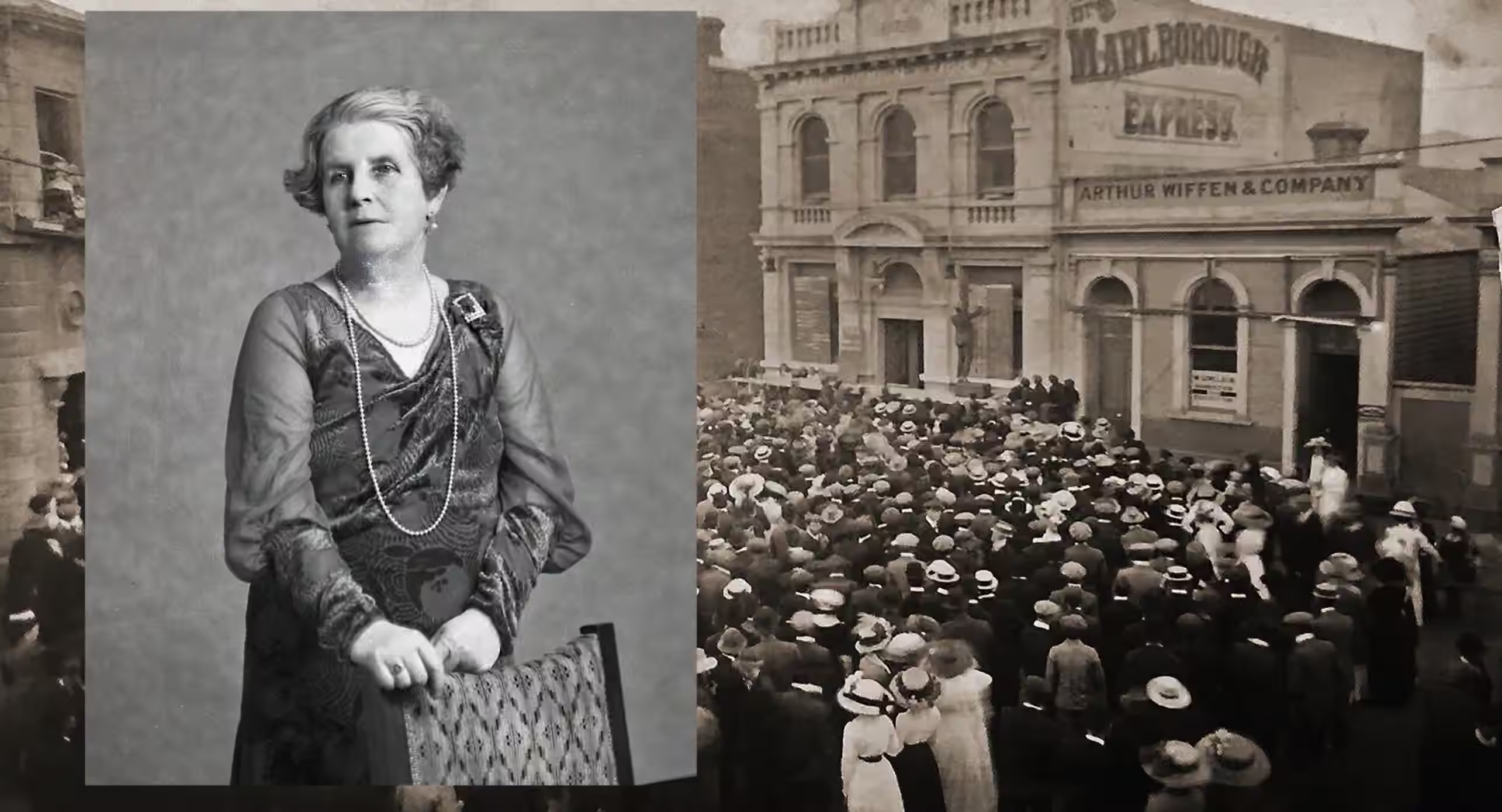
Mary was followed by generations of Marlborough women who found their own way to stand tall. Ada Redwood became Blenheim's first elected woman councillor in 1919, serving until 1927. Born at Cutters Bay in Port Underwood, Ellen Dougherty trained at Wellington Hospital and became the world's first registered nurse in 1902, holding registration medal number one. Pauline Bennett flew high at the Marlborough Aero Club as New Zealand's first female flying instructor. Mary Watson ran a travelling electric washing service from her motorcycle, riding rural roads to do the weekly wash on back country farms.
Image: Ada Redwood - Blenheim's first elected woman councillor. Source: Making Marlborough: The Migration Stories, Marlborough Video Vault (YouTube)
Some came from further afield. Born in Canton, Bickleen Fong arrived in New Zealand in 1939. After her family settled on orchards outside Blenheim, she attended Rapaura School and Marlborough College before completing studies at Queen Margaret College and Otago University. She later wrote a university thesis and an influential book on the lives of Chinese migrants in New Zealand. Her sister, Wai Lan, trained as a nurse and later became matron at Wairau Hospital.
Modern Migration, Industry & Community
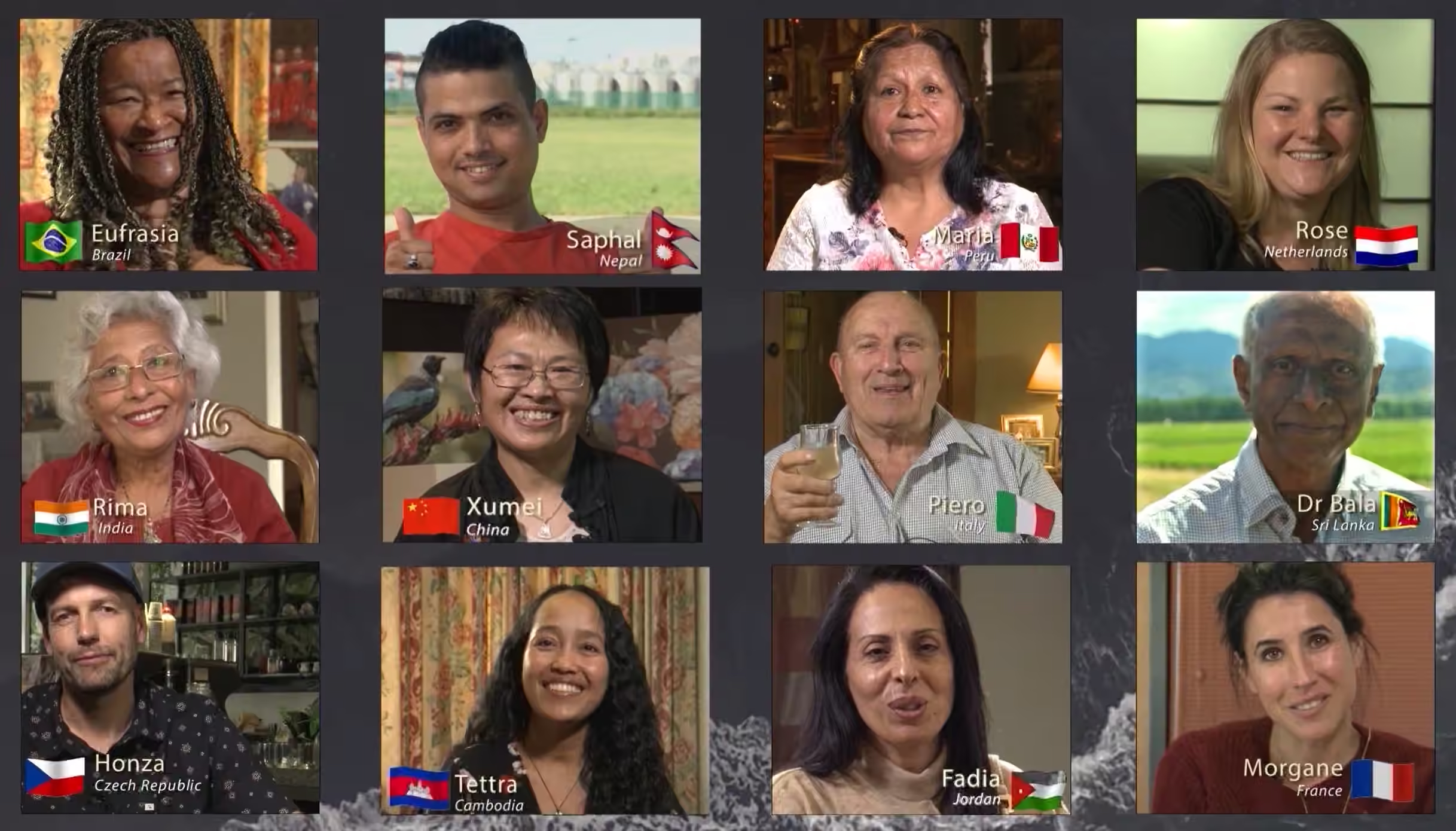
Image: Marlborough's multicultural community. Source: Making Marlborough: The Migration Stories, Marlborough Video Vault (YouTube)
Marlborough has always attracted people with vision. In 1864, fourteen-year-old Austino Perano ran away to sea from his home in Genoa, Italy, and settled in Picton a few years later. His son Joe harpooned his first humpback whale in 1911. The Perano family hunted whales in Cook Strait for the next 53 years, until whaling ended in December 1964. Their legacy remains in Cook Strait place names and the abandoned whaling station.
Others came for the land. David Herd from Scotland planted grapes at Fairhall in 1873, and the original earth cellar he built still exists. Mansour Peters immigrated from Lebanon in 1898 and planted his own small vineyard, selling wine from his Main Street general store until the 1950s. Seventy years later, Frank Yukich, of Croatian descent, purchased farmland in the Brancott Valley and planted the first Montana grapes on 24 August 1973. That vineyard sparked the huge growth of viticulture on the Wairau and Awatere plains, and Marlborough is now recognised as one of the world's great wine regions.
Today the wine industry depends on seasonal labour from the Pacific. The Recognised Seasonal Employer scheme began in Marlborough in 2007, with an estimated 700 Pacific Island workers arriving in the region during its initial season to prune vines. Workers from Vanuatu, the Solomon Islands, Tonga, Samoa, and Fiji return year after year, contributing to the regional economy and the social fabric of the community. Marlborough is now home to people from dozens of distinct cultural backgrounds, and the Marlborough Multicultural Centre in Blenheim supports newcomers from nearly 50 different ethnicities.
Do you or your family have a story of migration to Marlborough? The Marlborough Archives collects personal letters, photographs, and records from all regional communities. We welcome contributions, donations, and preservation opportunities.